
The Question Every Homeowner Asks First
You've been dreaming about a new kitchen for months — maybe years. You've scrolled through countless inspiration photos, picked out your dream countertops, and finally decided it's time. But before you commit, there's one question that stops almost everyone in their tracks: how long is this actually going to take?
It's a fair question. Your kitchen is the most-used room in your home. Living without it for weeks — or longer — is a big deal. And if you've heard horror stories from friends or neighbors about remodels that dragged on for months past the original estimate, you're right to want a clear answer before you start.
At Pinnacle Full Home Renovation, we walk our Delray Beach clients through a detailed timeline before any work begins. Here's what a realistic kitchen remodel schedule looks like, what causes delays, and how to keep your project moving smoothly.
The Short Answer
A typical full kitchen remodel takes 6 to 12 weeks from demolition to completion. A minor refresh — think new cabinet fronts, countertops, and a fresh coat of paint — can wrap up in 3 to 5 weeks. A large-scale renovation that involves moving walls, relocating plumbing, or expanding the footprint can stretch to 14 weeks or more.
But the construction phase is only part of the story. The planning and design phase that happens before demo day is just as important — and often takes longer than homeowners expect.
Phase 1: Design and Planning (3–6 Weeks)
This is where the magic starts. During this phase, you'll work with your remodeling team to finalize the layout, choose materials, and nail down the budget. Here's what typically happens:
- Initial consultation and measurements — Your contractor visits your home, takes detailed measurements, and discusses your goals.
- Design development — You'll review layout options, select cabinetry styles, countertop materials, backsplash tile, flooring, fixtures, and appliances.
- Permitting — In Delray Beach, most kitchen remodels that involve electrical, plumbing, or structural changes require permits from the city. Your contractor should handle this, but permit approval can take one to three weeks depending on the scope.
- Material ordering — Custom cabinetry can take 4 to 8 weeks to fabricate. Specialty tile, imported stone, and certain appliances may have lead times as well. Ordering early is critical.
This phase is where rushed decisions lead to regret. Take the time to get your selections right — it will save you from costly change orders later.
Phase 2: Demolition and Rough Work (1–2 Weeks)
Demo day is when things get real. Your old kitchen comes out — cabinets, countertops, flooring, backsplash, and sometimes walls. After demolition, the rough work begins:
- Structural changes — If you're removing a wall to open up the kitchen to a living area, this happens first. A structural engineer may need to specify a support beam.
- Plumbing rough-in — Moving the sink, adding a pot filler, or relocating the dishwasher all require plumbing adjustments behind the walls.
- Electrical rough-in — New circuits for appliances, under-cabinet lighting, pendant lights, and additional outlets are wired during this phase.
- HVAC adjustments — If the layout change affects ductwork or vent placement, that's addressed now too.
In South Florida, inspections are required after rough work is completed. Your contractor will schedule these with the city, and you'll need to pass before moving to the next phase.
Phase 3: Drywall, Painting, and Flooring (1–2 Weeks)
Once inspections are approved, the walls get patched or replaced with new drywall, then primed and painted. If you're installing new flooring — whether it's tile, luxury vinyl plank, or hardwood — this typically goes in before the cabinets so you get a clean, seamless look across the entire room.
Humidity is a real factor here in Delray Beach. A good contractor accounts for South Florida's climate when selecting materials and adhesives, ensuring your flooring and finishes hold up long-term.
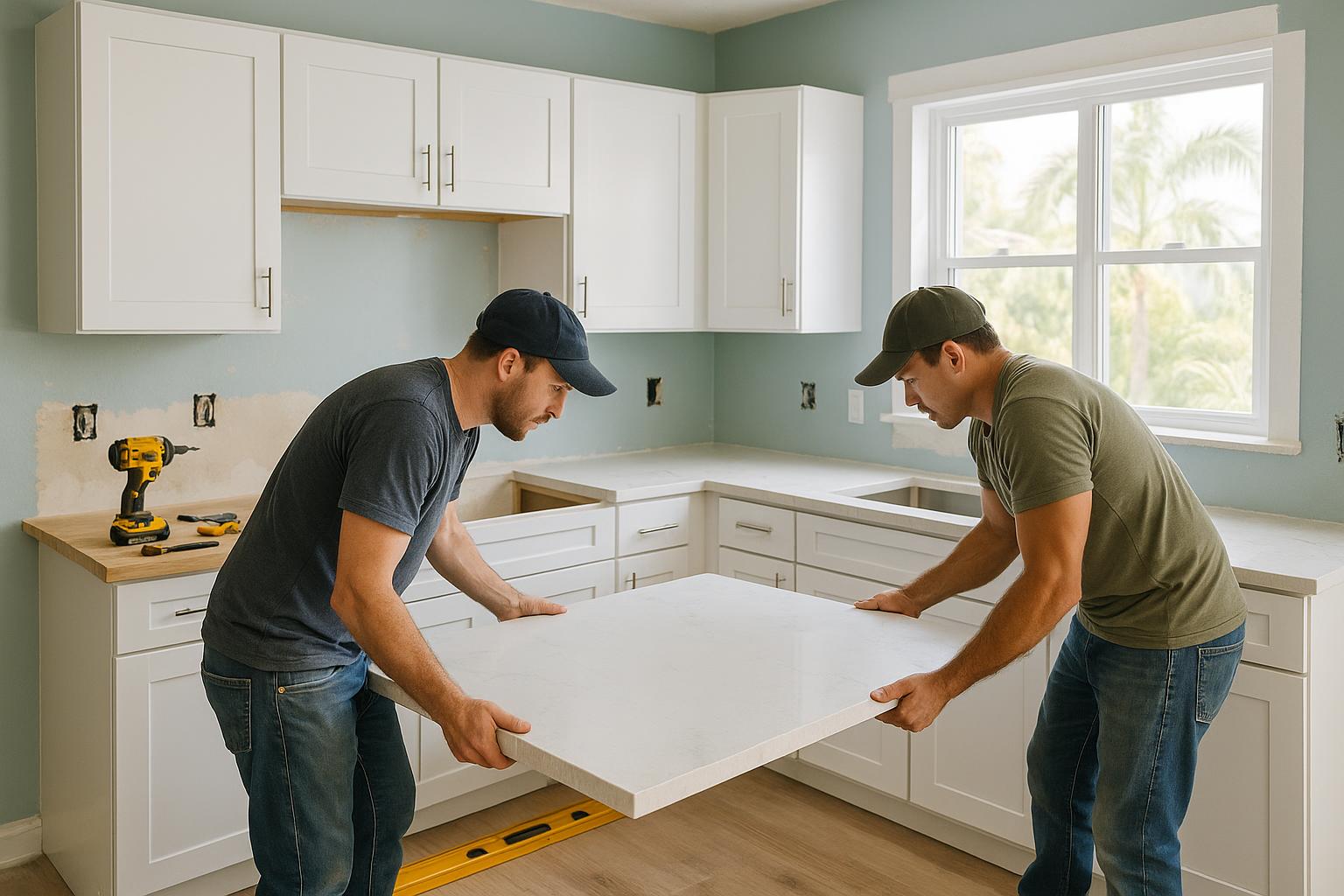
Phase 4: Cabinetry and Countertop Installation (1–2 Weeks)
This is the phase where your kitchen starts to look like a kitchen again. Cabinets are installed first, carefully leveled and secured. If you've chosen custom cabinetry with built-in storage solutions — pull-out shelves, spice racks, lazy Susans — everything is assembled and adjusted during this stage.
After cabinets are set, your countertop fabricator comes out for a final template measurement. The countertops are then cut to exact specifications and installed, usually within a week of templating. Stone countertops like quartz and granite are fabricated off-site and brought in as finished pieces.
Phase 5: Finishing Touches (1–2 Weeks)
The final stretch includes all the details that pull the room together:
- Backsplash installation — Tile, stone, or other materials are set and grouted.
- Fixture and appliance installation — Sinks, faucets, garbage disposals, dishwashers, ranges, and range hoods are connected.
- Lighting — Pendant lights, recessed cans, and under-cabinet LEDs are installed and tested.
- Hardware — Cabinet knobs, pulls, and any remaining trim pieces go on last.
- Final inspections — The city conducts a final inspection to verify everything meets code.
- Walkthrough and punch list — You walk through the finished kitchen with your contractor and note anything that needs adjustment. A reputable company addresses every item before considering the job complete.
What Causes Kitchen Remodel Delays?
Even with the best planning, delays happen. Here are the most common culprits:
- Material backorders — Supply chain issues can push delivery dates. Ordering materials as early as possible minimizes this risk.
- Permit delays — Municipal offices sometimes have backlogs, especially during peak building season in South Florida.
- Hidden problems — Once walls are opened, you might discover outdated wiring, water damage, or mold. These issues must be addressed before work continues.
- Change orders — Changing your mind about the layout, materials, or fixtures mid-project is the single biggest cause of timeline overruns. It's not that changes can't happen — it's that each one triggers a chain reaction of rescheduling and reordering.
How to Keep Your Remodel on Schedule
You have more control over the timeline than you might think. Here are practical steps that help:
- Finalize all selections before demo begins. Every material, fixture, and finish should be chosen and ordered before your contractor swings the first hammer.
- Be available for decisions. Quick responses to questions keep the crew moving. A two-day delay waiting for an answer can push the whole schedule.
- Hire a contractor who manages the full process. A company that handles design, permitting, construction, and finishing under one roof eliminates the coordination headaches that cause gaps between trades.
- Build in a buffer. Add two weeks to whatever timeline you're given. Not because you expect problems, but because real life — weather, inspections, shipping — doesn't always cooperate.
Ready to Start Planning?
If you're a homeowner in Delray Beach, Boca Raton, Boynton Beach, or the surrounding communities and you're thinking about a kitchen remodel, the best thing you can do right now is start the conversation early. The sooner you begin the design and material selection process, the sooner your contractor can lock in a realistic start date — and the sooner you'll be cooking in the kitchen you've always wanted.
At Pinnacle Full Home Renovation, we give every client a detailed project timeline before work begins, and we communicate proactively if anything changes. No surprises, no guesswork — just a clear path from your old kitchen to your new one.